Setting Up a Room for a Shared Meal
Setting up a room for a shared meal starts with its serving flow. Compare table, buffet and mixed layouts to choose a comfortable arrangement.
The common mistake when setting up a room for a shared meal is to arrange the chairs first and decide where the food will go later. That choice can leave people carrying hot dishes through a knot of seated guests, while the room’s main cost is not inconvenience but a meal that feels harder to join. A better plan begins with the food’s route from arrival to serving, then places people and furniture around it.
Setting up a room for a shared meal starts with the food’s route
Think through the meal in order: guests arrive, find a place to put coats or bags, locate the food, serve themselves or receive a plate, sit down, and eventually clear away. The furniture should support those actions without asking people to guess where to go next. A room need not be large to work well; it does need a legible sequence.
Decide early whether the meal is served at seats, collected from a buffet, or assembled from shared dishes at the table. That decision determines where queues may form, how much surface is needed, and whether guests will need to cross the room while carrying plates. It also helps settle a practical question: who is responsible for bringing dishes in and removing empties?
Use what is already in the room as a starting point. Notice doorways, fixed cupboards, radiators, windows, power points and any tables that cannot readily move. Keep food away from places where doors swing or people need to pass, and do not use a surface that is intended for another shared purpose, such as a sign-in table or an accessible work station.
Say you are arranging an invented community supper in a rectangular hall with a door at one short end and a serving hatch along a long wall. If guests are expected to collect food from the hatch, you might place the queue beside the wall and seats beyond it, leaving a direct approach from the door. The expected result is that people can see where to begin and carry plates to seats without cutting through the serving line.
A table service layout suits a meal built around conversation
With table service, people sit down before the food arrives, and dishes are brought to them or passed around. This suits a smaller group, a meal with several shared courses, or a gathering where staying in conversation matters more than choosing food at a buffet. It also gives a late arrival a clear destination: an available chair, rather than the back of a queue.
Tables work best when people can pass serving dishes without stretching across someone else’s place. Leave room at the centre for the food and keep water, napkins and serving utensils easy to reach. If the table is narrow, put some dishes on a separate nearby surface and pass them around in turn rather than making the middle a crowded display.
The trade-off is that table service asks someone to coordinate the food. Hosts may need to carry dishes, check who has been served and manage dietary choices without making a public announcement of anyone’s private needs. Where several people are helping, agree who brings what to the tables and who clears used dishes; otherwise everyone may politely wait for someone else to notice.
Consider how seats will be assigned. A fully fixed arrangement can make a group feel formal, while leaving all chairs loose can create awkward gaps or leave someone searching for a place. A useful middle ground is to set the tables and chairs, then leave one or two seats easy to pull out for late arrivals or people who prefer a particular position.
Choose table service when the number of guests is manageable for the people serving, the meal is intended to be social at the table, and the room has enough surface for dishes and place settings. If those conditions are not met, another format may ask less of both hosts and guests.
A buffet layout gives guests more choice but needs a patient queue
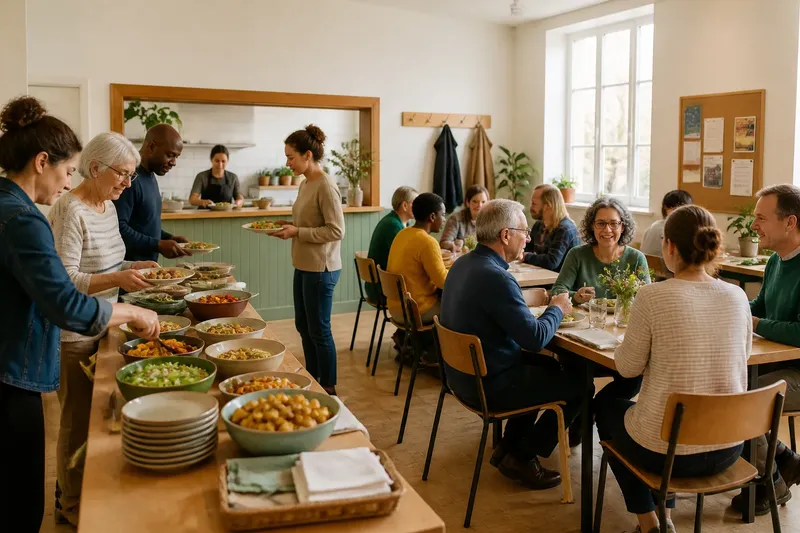
A buffet suits a larger or more varied gathering where guests arrive at different times, select different foods, or prefer to choose their own portions. It can also reduce the need to carry fully plated meals around a room. Its main demand is space for people to approach the food, pause, serve themselves and move away without blocking everyone behind them.
Arrange the serving surface in the order guests will use it: plates first, then main dishes and sides, followed by condiments or accompaniments. Put cutlery and napkins at the end or on a nearby separate table if collecting them at the start would make people juggle. Keep serving spoons with the dishes they belong to, rather than expecting guests to improvise with the nearest utensil.
A queue should have a clear beginning and a natural direction of travel. If guests can approach from both ends, they may reach across one another or be unsure where the line starts. A single approach is often simpler, but it should not run through the entrance or block a route people need to use while carrying plates.
Give the queue somewhere to go after the food. A buffet that ends directly beside the only seating area can turn chairs into obstacles as guests try to leave the line. Place seats beyond the serving point or leave an open patch where people can turn and decide where to sit. The aim is not to choreograph every movement; it is to prevent a small pause from becoming a traffic jam.
Buffet service suits a group that can accept a little waiting and has enough room for a line and a separate place to eat. It is less comfortable when the serving surface is cramped, guests have limited mobility, or people need assistance carrying plates. Those needs do not rule out a buffet, but they do make a mixed arrangement or a helper worth considering.
A mixed layout balances self-service with help at the table
A mixed layout combines a self-service surface with seated eating and some assistance. Guests might collect their own food while a host helps anyone who asks, or a few dishes might be placed on tables while drinks and extra portions remain at a sideboard. This works well when the group includes different preferences and the room cannot comfortably support a long buffet queue.
Keep the division simple. If hot dishes are served from one surface and cold dishes from another, place them close enough that guests understand the arrangement without a verbal tour. Put extra plates, water and napkins where they can be reached without sending people back through the food line.
A mixed layout can also suit a meal where some guests arrive before others. Early arrivals can sit and talk while a host brings out remaining dishes; later guests can find the serving point without interrupting the table. The risk is that an arrangement with too many separate stations becomes a scavenger hunt. Use distinct surfaces only when each has a clear purpose.
Choose this approach when neither full table service nor a single buffet fits the group. It is particularly useful where a few guests may want help but others prefer to serve themselves. Before settling on it, check that the helper can assist without becoming a permanent bottleneck beside the food.
Seat people where conversation and movement can coexist
Once the meal’s serving format is clear, arrange seating to suit both the conversation and the route to food. A long table encourages shared conversation along its length, while smaller tables let people talk in close groups. Rows may be useful for a brief welcome or a meal with a presentation, but they are less inviting when guests are meant to talk over food.
Do not fill every possible chair into the room. Leave enough space for someone to pull a chair back and sit down without asking a neighbour to move, and keep seats from becoming part of the buffet queue. If people need a chair with arms or space for a mobility aid, make that position part of the seating plan rather than an afterthought.
Place guests who need a quieter or more accessible position where they can reach the meal and join conversation without having to cross a busy area. Avoid making one seat conspicuously different unless the person has asked for it. A small adjustment to a table or chair often does more than a public explanation.
Where attendance is open, keep a few places flexible. That does not mean leaving a conspicuous empty table; it means avoiding an arrangement so tightly packed that a late guest must interrupt several people to sit down. A host can quietly point out the available space as people arrive.
Use serving surfaces that make each task obvious
The main serving surface should be stable, easy to approach and large enough for the dishes actually being served. A dining table, trestle table or sideboard can work, depending on the room. Keep decorative objects and unrelated paperwork elsewhere; shared meals rarely benefit from a vase occupying the only sensible place for plates.
Separate food from the clearing point. If guests are expected to return used plates, set a tray or trolley away from the buffet so clean food and dirty dishes do not share a landing area. Keep waste and recycling visible enough to find, but not in a position that makes the meal smell like the end of a bin day.
Consider the height and approach of the surfaces. People should be able to set down a plate while serving themselves, and a helper should be able to reach dishes without leaning across guests. If the available table is too small, remove non-essential items or use a second, clearly assigned surface rather than stacking dishes in unstable piles.
Check the room’s furniture and any food-service requirements against their labels, manufacturer instructions and local rules, particularly where hot food or powered equipment is involved. For other arrangements, use ordinary judgement about stability, cleanliness and the needs of the people attending.
Make the entrance a clear place to begin
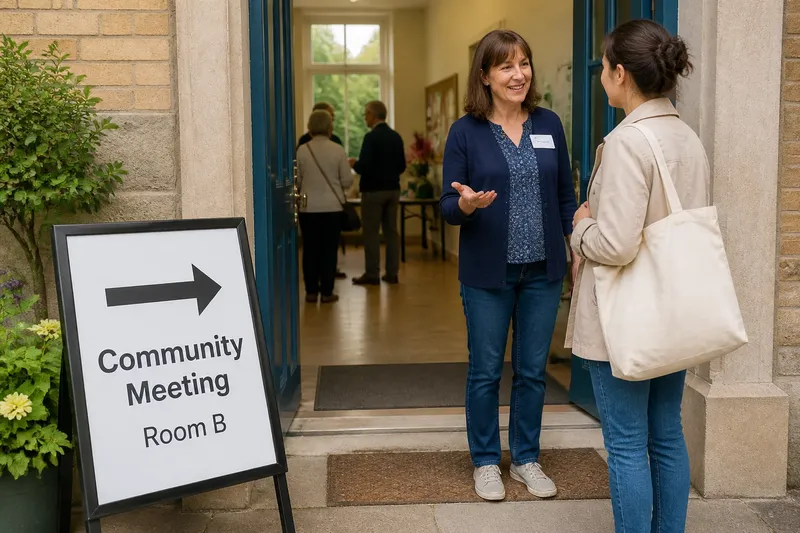
Guests should be able to enter and understand the first useful action: put belongings somewhere, greet the host, or head towards the meal. A small welcome point can help, but it should not become a second queue that blocks the doorway. If the host is greeting people, leave enough space for someone to pause without preventing others from coming in.
Keep coats and bags away from food and from the chairs people will need. A coat rack, labelled shelf or spare room can help if one is available; a pile on the nearest chair tends to make that chair unavailable and the room look full before everyone has arrived. Tell guests where belongings go with a brief spoken direction or a simple sign only when the destination is not obvious.
The entrance is also where someone can ask for help discreetly. A host who stays near the beginning of the room for a while can point out seating, food and the way to the toilets without turning the event into a guided tour. Once people have settled, that person can join the meal rather than serving as a permanent information desk.
Which meal layout fits the room and the group?
When is table service the better choice?
Choose table service when guests are likely to stay seated together and the hosts can bring food to them. It is a sensible fit for shared dishes and a group small enough that serving does not consume the whole gathering.
How much space does a buffet need?
A buffet needs room for the serving surface, an approach to it and a place for guests to move away with their plates. If that route would cross the entrance or cut through seated guests, use table service or simplify the buffet instead.
Can a shared meal work with one serving table?
Yes, if the dishes, plates and utensils fit without crowding and guests can approach in an orderly direction. Move drinks or extra supplies to a separate surface when their presence would slow the line or leave no place to set down a plate.
What should change when guests need assistance?
Plan an easy route from the entrance to seating and food, and ask privately whether anyone would like help carrying a plate or choosing a seat. Keep assistance available without making a guest wait in the main queue or explain their needs to the room.
Choose the layout by tracing one guest’s visit
To choose among table service, a buffet and a mixed layout, trace one guest’s visit from the doorway through the meal and back out. Ask where they put their coat, how they find food, where they sit, and how they clear a plate. If any answer depends on moving through a queue or asking several people for directions, adjust the arrangement before adding more furniture.
Then consider the people hosting. A format that looks effortless on paper may keep one volunteer carrying dishes all evening, while a buffet may leave a guest needing help to manage a plate. Match the layout to the people available, the food being served and the room’s fixed features, rather than treating one arrangement as the proper way to host.
Good setting up for a shared meal is not about making the room look finished before anyone arrives. It is about giving each person a clear place to begin, a reasonable way to reach food and a seat where they can stay part of the gathering. Leave the room ready for those ordinary movements, and the meal can take care of the rest.