The Noticeboard Before the Group Chat
A shared-room noticeboard keeps dates, decisions and open invitations visible at a glance, including for people who are not in the group chat.
The common noticeboard mistake is to treat it as a dumping ground for anything too small to send as a message. The cost is that the one thing someone needs to see—a changed room booking, an open invitation, a missing set of keys—ends up buried under old flyers and curling scraps. A noticeboard earns its place by making a shared record legible to people who were not present when it was made.
That is a different job from keeping everyone up to date in real time. A group chat is good at replies, quick coordination and catching a last-minute change. A board makes selected information stay in view, beside the room where it matters. The two can support each other without pretending to be the same tool.
A noticeboard gives shared information a place
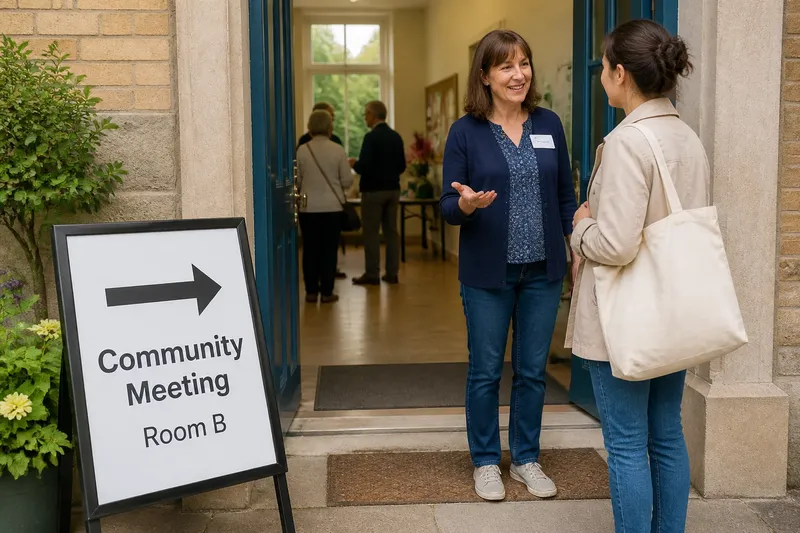
Messages arrive in a stream. A noticeboard turns a few of them into something people can scan without joining a conversation, searching a phone or knowing which thread to open. Someone entering the community room to borrow a trolley may notice that the repair café has moved; someone waiting for a class may see a request for volunteers.
Its audience is not limited to people who already belong to a chat. Visitors, new members and residents who do not use the group’s preferred app can still encounter information while they are in the room. That does not make the board universally accessible: someone must be able to reach it, read it and understand what is current. But it offers a different point of contact from a private digital channel.
Keep the board near a natural pause, such as the entrance or a place where people wait, rather than behind a cupboard door or in a corner used only by organisers. Put the most useful shared information where a person can look at it without blocking someone else’s way.
The board makes a small record of how the room is used
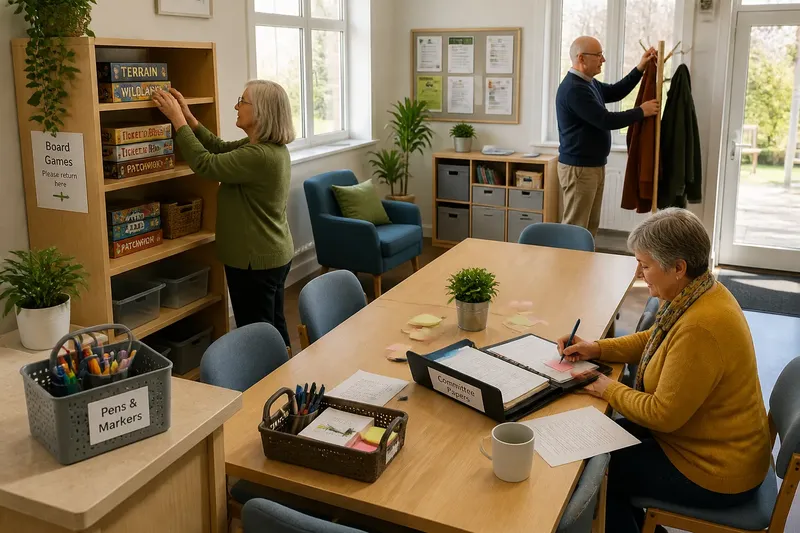
A noticeboard does more than announce events. Over time, it can show what kinds of activity happen in the room, who is invited to take part and which requests keep coming up. A sequence of class notices, repair sessions and community meals presents a rough portrait of the space. It is not a full account; the board records what someone chose to post, not everything that happened.
That visible record can help a new user understand the room’s rhythms. A person who sees a recurring craft session or a regular residents’ meeting has a better chance of recognising that the room is shared, rather than an empty facility available only to people already in the know. The board can also make small contributions visible: a borrowed item returned, a tool sought, or a note asking for help with a future event.
Say a neighbourhood group has been arranging a monthly swap through a chat used by its regulars. If the organiser posts a dated notice with the next meeting time and a clear invitation on the room’s board, a person who visits for another activity may see it and ask how to join. The observable result is not a promise of extra attendance; it is that the invitation is present where that person can encounter it.
Choose what deserves to remain visible
The board works best when it carries information people may need to consult later, rather than every passing update. A short note can make a decision durable: the room is reserved for a particular activity, a shared item is available to borrow, or a group is looking for someone to take on a task. Add a contact route so readers know what to do next.
Chat remains better suited to rapid back-and-forth. If a key holder is delayed or someone wants to ask whether a spare chair is available tonight, a message can invite an immediate response. If a group agrees on a recurring date or a change that newcomers also need to know, the board gives that information a more stable home.
- Post lasting arrangements. Include the activity, date or recurring pattern, and a way to ask for details.
- Keep invitations open-ended. Say who can take part and how to make contact, rather than assuming readers know the organiser.
- Leave conversation in the chat. A long exchange, tentative suggestion or rapid update is difficult to keep clear on paper.
- Move decisions out of the thread. Once a group settles on a date or shared arrangement, give it a concise notice with a review date.
One useful division: use the chat to arrive at a decision, then use the board to make the decision findable.
A good layout helps readers judge what is current
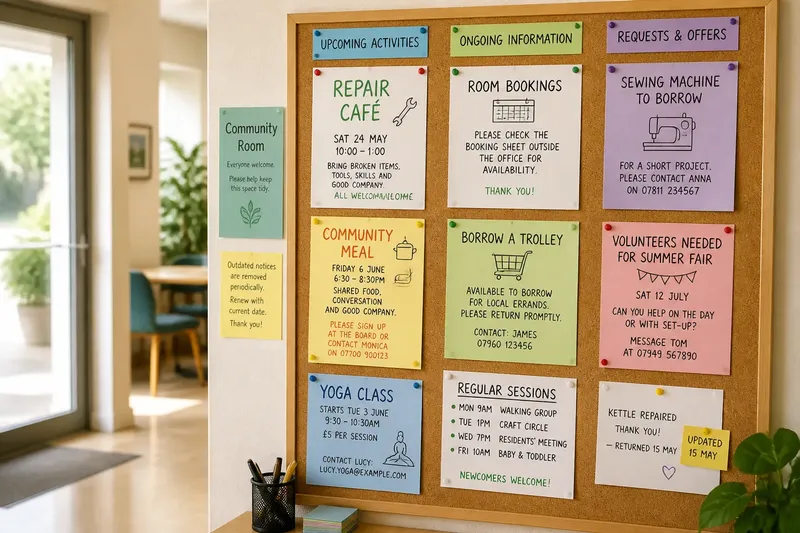
Paper competes by taking up space. If every notice uses the same size, colour and position, readers must inspect each one to discover whether it is relevant. Give the board a simple visual order: a clear area for upcoming activities, another for ongoing information, and a modest space for requests or offers. The labels should describe what is there, not require a private explanation.
Make dates easy to spot and remove notices when their purpose has passed. A flyer with a large title but no year, contact details or clear venue can look important while answering very little. If an event recurs, make the next date unmistakable; do not ask readers to infer that a previous notice is still valid.
Use a consistent way to mark updates, such as a handwritten “changed” note with the new date, rather than pinning a correction beside the original and hoping people compare them. If the old version could mislead someone, take it down. The board should show the current arrangement, not the history of every edit.
Who can post, and who decides what comes down?
A board that anyone can use may collect useful local knowledge, but it can also become crowded or carry material that does not belong in a shared space. A board controlled by one organiser may stay tidy while missing the needs of other groups. Agreeing a light-touch arrangement helps keep both problems visible.
For example, a community room might reserve one section for regular bookings and another for notices from any user group. The people responsible for the room can review dated items as part of ordinary care, while leaving a clear contact for anyone who wants to post. The exact arrangement depends on the room and its community; keep personal details off public display and follow any local rules that apply.
Make removal feel routine rather than punitive. A small note explaining that outdated notices are cleared periodically is less likely to surprise a group whose event has passed. If something should remain, its organiser can renew it with a current date and contact route.
What should go on a shared-room noticeboard?
Should every group use the same board?
Often, one shared board is easier to find than several competing ones, but it needs clear sections so regular bookings do not crowd out open invitations. In a busy room, a second board may make sense if each has a distinct purpose and people can tell which one to check.
How often should notices be cleared?
Clear notices when their dates or purpose have passed, and review ongoing items at a regular, manageable interval. A visible review date gives an organiser a prompt to renew useful information instead of letting it fade into the background.
What makes a notice easy to act on?
State what is happening, when and where, who it is for, and how to ask a question or take part. Use legible handwriting or print, a strong contrast between text and paper, and enough white space to separate the useful details.
Can the board replace the group chat?
No; it cannot carry the same quick exchange, private coordination or timely reply. It can, however, make a settled arrangement visible to people who are outside the chat or who need to find the information later.
Let the board show the room is shared
The most useful noticeboard is not necessarily the fullest. It gives people who use the room a modest way to leave information for one another: an invitation, an agreed arrangement, a request that can be answered later. A clean patch of board is not wasted space if it lets the next notice be read.
For a shared-room noticeboard, the final check is simple: could someone who missed the conversation tell what is current and what to do next? If not, revise the notice or move the detail to a channel better suited to it. The board need not record everything; it should make the room’s useful, shared information visible without asking anyone to know the right person first.